My work investigates the unstable condition of images: how they survive, return, and transform long after their original context has disappeared. Rather than illustrating memories or historical events, I approach the image as a residue—something that persists, fades, or fractures, yet continues to exert a silent pressure on the present.
Through painting, collage, and the use of found images, I construct visual situations in which time is no longer linear but layered. Fragments of faces, gestures, or objects emerge as if arriving from another place, carrying a tension between appearance and disappearance. They do not seek clarity; they inhabit a zone of uncertainty where what is visible coexists with what can no longer be fully seen.
My process often resembles an archaeological practice. I recover images from the internet, film stills, or archival materials and transform them until they cease to function as documents and become traces instead. In this shift, the image acquires a spectral condition—neither fully alive nor completely absent, suspended in an intermediate state.
I am interested in how the viewer negotiates this unresolved space. Each work operates as a threshold, inviting the gaze to slow down and linger before what is fragile, partial, or damaged. The aim is not to reconstruct a narrative, but to expose the fractures through which meaning seeps.
Ultimately, my practice reflects on how visual culture shapes our perception of absence, memory, and vulnerability. By working with what is already broken or incomplete, I seek to reveal a form of presence that resists disappearance—a presence that remains, even when the image seems on the verge of vanishing.
Mi trabajo investiga la condición inestable de las imágenes: cómo sobreviven, regresan y se transforman mucho después de que su contexto original haya desaparecido. Más que ilustrar recuerdos o acontecimientos históricos, abordo la imagen como un residuo, algo que persiste, se desvanece o se fractura, pero que continúa ejerciendo una presión silenciosa sobre el presente.
A través de la pintura, el collage y el uso de imágenes encontradas, construyo situaciones visuales donde el tiempo deja de ser lineal para convertirse en una superposición de capas. Fragmentos de rostros, gestos u objetos emergen como si procedieran de otro lugar, cargando consigo una tensión entre aparición y desaparición. No buscan la claridad; habitan una zona de incertidumbre donde lo visible convive con lo que ya no puede verse del todo.
Mi proceso se acerca, en ocasiones, a una práctica arqueológica. Recupero imágenes procedentes de internet, fotogramas de cine o materiales de archivo, y las transformo hasta que dejan de ser documentos para convertirse en huellas. En esa transformación, la imagen adquiere un carácter espectral: no plenamente viva ni completamente ausente, suspendida en un estado intermedio.
Me interesa cómo el espectador negocia ese espacio irresuelto. Cada obra funciona como un umbral que invita a la mirada a detenerse y a permanecer ante lo frágil, lo parcial o lo dañado. El objetivo no es reconstruir una narrativa, sino exponer las fracturas por las que se filtra el sentido.
En última instancia, mi práctica reflexiona sobre cómo la cultura visual moldea nuestra percepción de la ausencia, la memoria y la vulnerabilidad. Al trabajar con lo ya roto o incompleto, intento revelar una forma de presencia que resiste a la desaparición, una presencia que perdura incluso cuando la imagen parece a punto de extinguirse.
My work investigates the unstable condition of images: how they survive, return, and transform long after their original context has disappeared. Rather than illustrating memories or historical events, I approach the image as a residue—something that persists, fades, or fractures, yet continues to exert a silent pressure on the present.
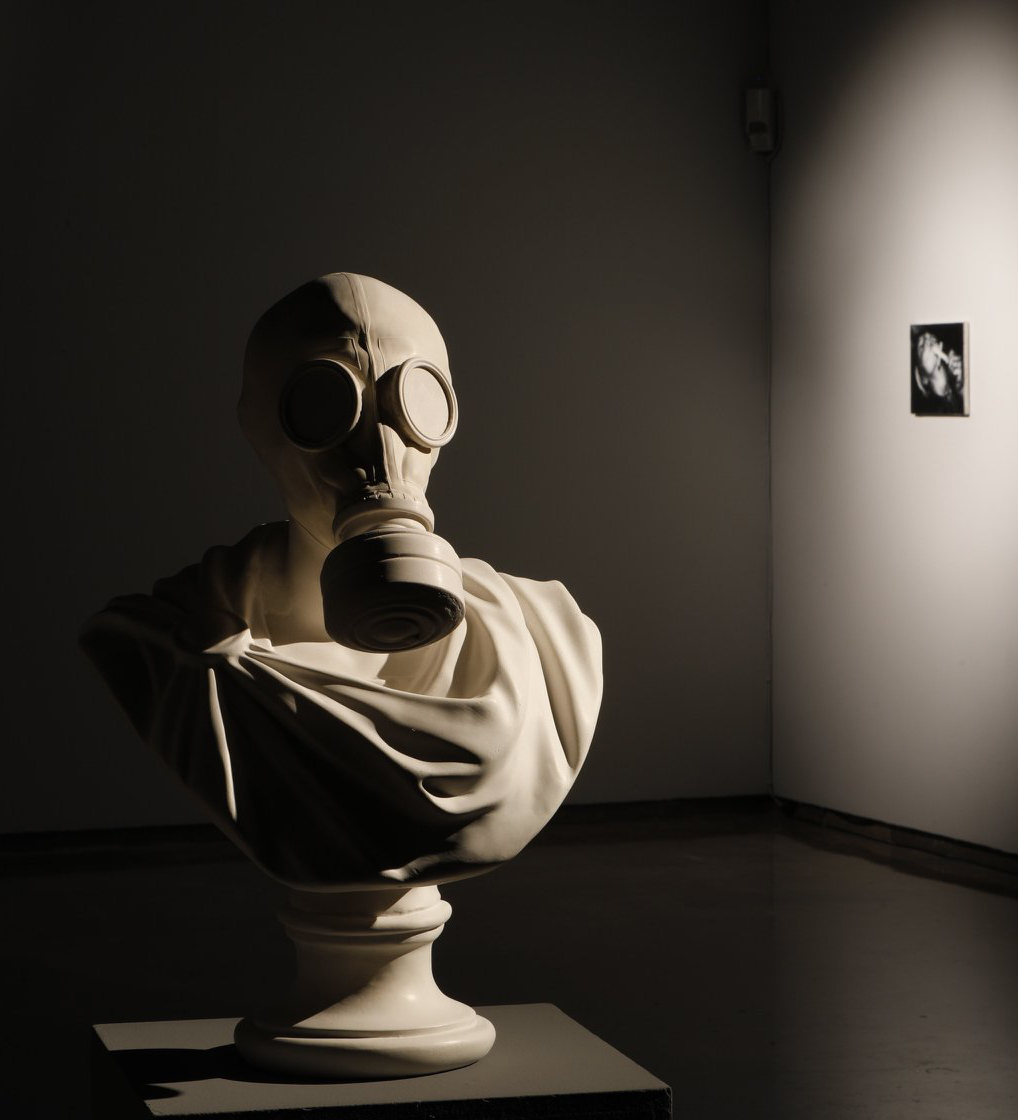
Si tu mirada fuera más sutil, verías cómo se mueven todas las cosas: igual que se retuerce el papel que arde, así se desvanece todo perpetuamente al encogerse.
F. Nietzsche, Fragmentos póstumos, otoño de 1981.